

Research Center Neurosensory Sciences
|
Neurosensory Science:From sensory systems to cognition
|
|
Carl von Ossietzky University Oldenburg Research Center Neurosensory Science Carl-von-Ossietzky-Straße 9-11 26111 Oldenburg Dr. Beate Grünberg Raum W4-0-082 (Campus Wechloy) Tel.: +49-(0)441-798-3882 Fax: +49-(0)441-798-193882
|
Aims
How does a picture get into our head or music into our ears?
The research centre Neurosensory Sciences aims to answer these or similar questions. Neurobiologists, psychophysicists, physicians, psychologists and computer scientists collaborate in order to elucidate the processes, by which our brain produces an interior image of the surrounding world on the basis of messages obtained from our sensory organs.
These are processes in the sensory organs, which form first sensorial units from the flood of sensations, as well as processes that construct a perception in the brain from them. Emphasis is put on the investigation of interactions between different sensations. Corresponding to the interdisciplinary composition of the research centre, several up-to-date techniques covering molecular biology, image-forming techniques as well as algorithm development are employed.
Several research groups have been established in the field of neuronal sensors at the University of Oldenburg in the past years. The research centre Neurosensory Sciences regards itself as an umbrella organisation for these groups. It concentrates the interdisciplinary activities of the different research groups and, beyond that, plays an active part in advancing the collaboration with external institutions. An important task of the centre is the support to young scientists and the advanced training in the respective research fields.
The research centre consists of the three project fields: perception, robotics and prosthetics.
The processing of an exterior stimulus (optical, acoustical or mechanical) by a biological system is investigated from the primary sensory receptor until a reaction. Special attention is paid to the transformation of the physical stimulus into its “internal representation”, which can be modelled by a specific neuronal recognition pattern. Neuronal attribute detectors play an important part in this process; their structure and function are investigated neurobiologically and psychophysically by means of models. The subsequent formation of perceptive objects (e.g. auditive objects) is characterized by an interplay of stimulus-driven bottom-up processes and hypothesis-controlled top-down mechanisms.
By comparing and directly realizing neurophysiological or psychophysical experiments, by modelling the processes in the sensory system and by implementing technical systems (e.g. speech recognition, hearing aids), the research groups expect a better knowledge about neuronal processing mechanisms of sensory stimuli and a progress in the technical processing and recognition of optical, acoustical and mechanical sensory stimuli.
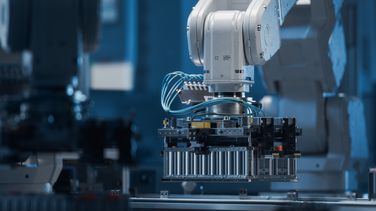
Robotics generally means the extension and supplementation of the limited human manipulation capability. At Oldenburg University, a main focus is on microrobotics, micro-operation and manipulation under special environmental conditions such as vacuum, strong magnetic fields, radiation. Fields of application are among others: Automation of material testing on the nanoscale, dealing with biological cells as well as assistance in radiological and minimal-invasive medical operations.
Besides the ultimate automated robot control, sensory recording of micro- or nanoscopic objects as well as the integration of a human controller are required for cybernetic stabilization of the processes. Light microscopy, atomic force microscopy, medical imaging techniques such as CT, MRT and ultrasound, scanning electron microscopy etc. count among the objects mentioned above. Research questions that remain to be investigated are: Adjustment of sensor data to a form of representation intelligible to the user as well as recording of the user’s reaction and its transformation into appropriate robot actions. The findings of the perception project serve as a basis for novel concepts and co-operation? with robot systems. The implementation of artificial neural networks and Fuzzy-logics for processing incomplete or noisy sensor information is currently being investigated. These research activities are endorsed by the implementation of novel microrobot systems, computer-aided design systems and architecture approaches to robot control.
Prosthetics means the restoration or compensation of normal sensorial and motor capabilities of a person. The main focus of this project is the investigation of technical systems for processing acoustical and optical stimuli.
The neurobiological research approach is closely connected with material science and data processing. This collaboration intents to develop technical compensation systems for the biological sensory performance of humans. On the material side, inorganic / organic heterocompounds are the focus of interest. These novel compounds represent a very good compromise in respect of biocompatibility. Their potential has remained largely unused in realization so far. For developing and testing such compounds, preparatory as well as spectroscopic and scanning-sensor microscopical methods are required, which are available in the research centre.
Auditive and visual sensory performance is the crucial research topic. In this field, the members of the research centre Neurosensory Sciences have a broad expertise covering a range from the enlightenment of signal transduction processes to the neuronal fundamentals of cognitive processes. A variety of methods are applied including molecular biological, neuroanatomical and electrophysiological techniques as well as image formation, psychophysical methods and modelling.
Research Center Neurosensory Sciences
| Managing Director
|
Reto Weiler |
Tel: 0441 798 2581
|
| Excecutive Board
|
Christoph Herrmann | Tel: 0441 798 4936
|
| |
Georg M. Klump | Tel: 0441 798 3400
|
| |
Reto Weiler | Tel: 0441 798 2581
|
| General Manager
|
Beate Grünberg |
Tel: 0441 798 3882
|
Statutes of the Research Center, November 12, 2003

uni-oldenburg.de